

14–19 September 2026
This Summer School explores theories and methods in educational policy research, with a specific focus on geopolitical dis/rupture and its implications for education policy.
Lectures and discussions are complemented by hands-on experience in education policy analysis.
Participants will work in small study groups on a case study on international access to higher education, with special attention to refugees’ access to Italian universities.
WHAT YOU WILL EXPLORE
- The role of theory in understanding educational policy
- Global, national and institutional governance in education
- Document analysis, discourse analysis and educational ethnography
- Policies on international access to higher education
- Refugees’ access to Italian universities
- Urgent policy issues from participants’ countries
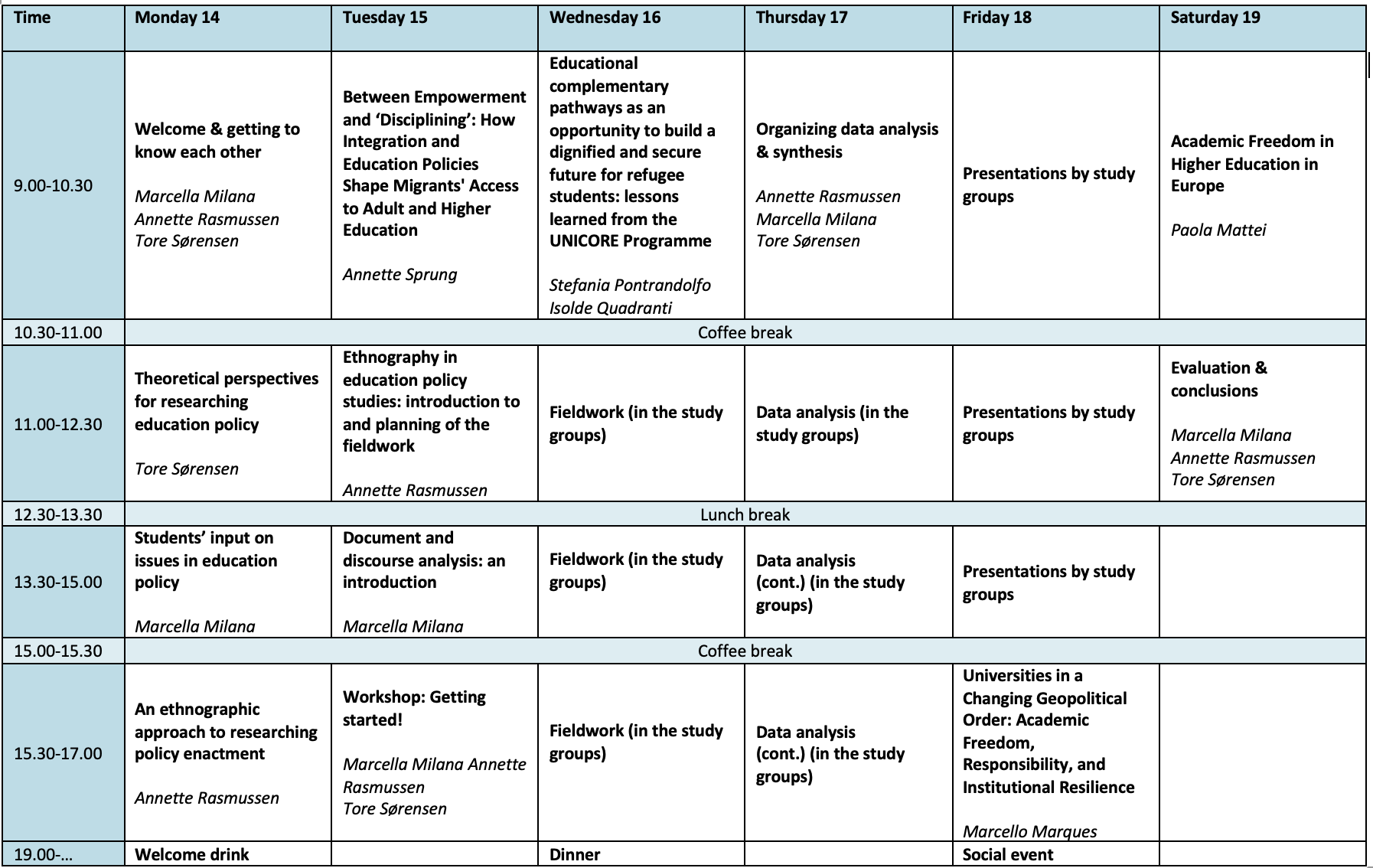

Marcella Milana (University of Verona), programme coordinator and host
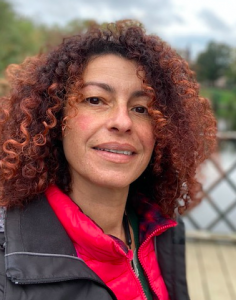
Marcella Milana is Associate Professor at the University of Verona, Italy, where she directs the International Research Centre for Global and Comparative Policy Studies on the Education and Learning of Adults (IRC-GloCoPoS), and Honorary Professor of Adult Education at the University of Nottingham. Her research deals with the politics, policy and governance of adult education and learning, from comparative and global perspectives. She is the current Chair of the European Society for Research on the Education of Adults (ESREA), and a joint convenor of the ESREA Network on Policy Studies on Adult Education, and of Network 23: Policy Studies and Politics of Education, under the European Educational Research Association (EERA).
Annette Rasmussen (Aalborg University), programme coordinator

Annette Rasmussen is Associate Professor at the Department of Culture and Communication, Aalborg University. Her research interests include ethnographic approaches to education policies and practices; especially issues of socialisation, evaluation, pedagogic and social differentiation, and inequality in education. In recent research and publications, she has focused on policies and practices of performativity and talent development.
Tore Bernt Sørensen (University of Glasgow), programme coordinator
 Tore Bernt Sørensen is Lecturer in School of Education, University of Glasgow. His research interests include global education governance, globalisation and Europeanisation, the teaching profession, and policy learning. Before coming to Glasgow in late 2023, Tore worked as a postdoctoral researcher in the Hertie School's Educational Governance Team (Berlin, Germany), Taube Centre for Advanced Studies in the Social Sciences, Jagiellonian University (Krakow, Poland), and in Groupe interdisciplinaire de Recherche sur la Socialisation, l'Education et la Formation (GIRSEF), UC Louvain (Belgium). Tore is an executive editor for the European Educational Research Journal.
Annette Sprung (University of Graz), Lecturer
 Annette Sprung is Professor of Migration and Education at the Department of Educational Science at the University of Graz (Austria). Her research focuses on adult learning and education in the context of migration, racisms, intersectionality, active citizenship and ageing. She is co-convener of the Network on Migration, Transnationalism and Racisms within the European Society of Research on the Education of Adults (ESREA).
Stefania Pontrandolfi (University of Verona), Lecturer
 Stefania Pontrandolfo (IPEP 2026 Lecturer) holds a PhD in Anthropologie sociale et ethnologie from the Ecole des Hautes Etudes en Sciences Sociales (EHESS) in Paris. She has participated in various roles, including coordination, in national and international research projects. She has carried out several ethnographic research projects, mainly dealing with the culture, history, and society of Roma groups in Southern Italy, those who migrated from Romania to Italy, and anti-gypsyism/anti-nomadism. She is the Representative of the Rector for International Cooperation for Development at Verona University and the Director of the CREAa (Centre for Ethnographic Research and Applied Anthropology) in the Department of Human Sciences (Verona University).
Isolde Quadranti (University of Verona), Lecturer
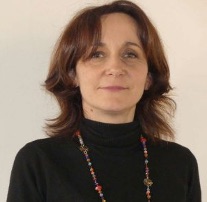
Isolde Quadranti (IPEP 2026 Lecturer) is the contact person for the UNHCR Manifesto Università Inclusiva network and the Scholars at Risk Italy network at the University of Verona. She is also Head Documentalist of the University's European Documentation Centre. She has contributed to and spoken at international forums, training courses, and seminars on complementary pathways for admission to third countries and on refugees and higher education, with a particular focus on the hosting and integration of scholars and students.
Marcelo Marques (University of Luxembourg), Lecturer
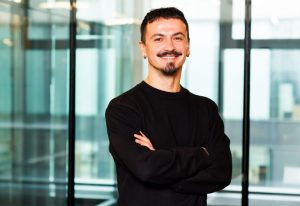 Marcelo Marques is a postdoctoral fellow at the University of Luxembourg, specializing in comparative institutional and organizational analysis. His research explores transnational governance and regionalization processes in higher education and science, and their intersections with other policy domains. He currently serves as Senior Associate Editor of Comparative Education Review.
Paola Mattei (State University of Milan), Lecturer
 Paola Mattei is Professor of Public Policy and Political Science at the Department of Social and Political Sciences, University of Milan, Italy. She is the Director of the Evidence-Based Policy and Research Action Hub (EPRA Hub) at the University of Milan. Her research to date has investigated public management reforms in public organisations; public accountability mechanisms, and citizens’ public engagement policies; globalization and education policies (see Handbook on Globalization and Education, published by Oxford University Press). Underlying her research is the problematic relationship between accountability, democracy, markets and the contemporary reforms of public services. Her book Democratizing Science was published in September 2023 by Bristol University Press.
HOW TO APPLY
Apply before 7 June 2026 through the following procedure:
1. Send to irc-glocopos@ateneo.univr.it a mail with object “Application to IPEP 2026” and attach a single pdf file, titled under your full name, containing:
- A brief CV (1 page)
-
A motivation letter (max. 2 pages)
2. Complete the online form here
IPEP Faculty will select candidates and confirm acceptance by 19 June 2026.
Approved candidates should register (free of charge) by 30 June 2026.
Enrollment is free of charge. Participants cover travel, accommodation, lunches and dinners.
All participants will receive a certificate of attendance upon full attendance.
Interested participants can also be credited 6 ECTS upon:
- Full attendance
- Submission of a short essay by 10 October 2026 for evaluation by the IPEP Faculty
 The European Society for Research on the Education of Adults (ESREA) offers up to four travel bursaries of €400 each to support PhD students (or equivalent) attending IPEP 2026 to help cover travel, accommodation, or other related expenses (such as meals).
Bursaries are awarded based on the quality of the application, as well as consideration of geographical representation and diversity.
Eligibility Criteria
- Only candidates approved to attend IPEP 2026 will be eligible.
- Eligible candidates must be individual or institutional ESREA members. (To join or renew your membership, please click here.)
IPEP 2026 is run in collaboration between the University of Verona (Italy), Aalborg University (Denmark) and the UNESCO Chair in Global Citizenship Education in Higher Education (University of Bologna, Italy).

For more information: irc-glocopos@ateneo.univr.it