



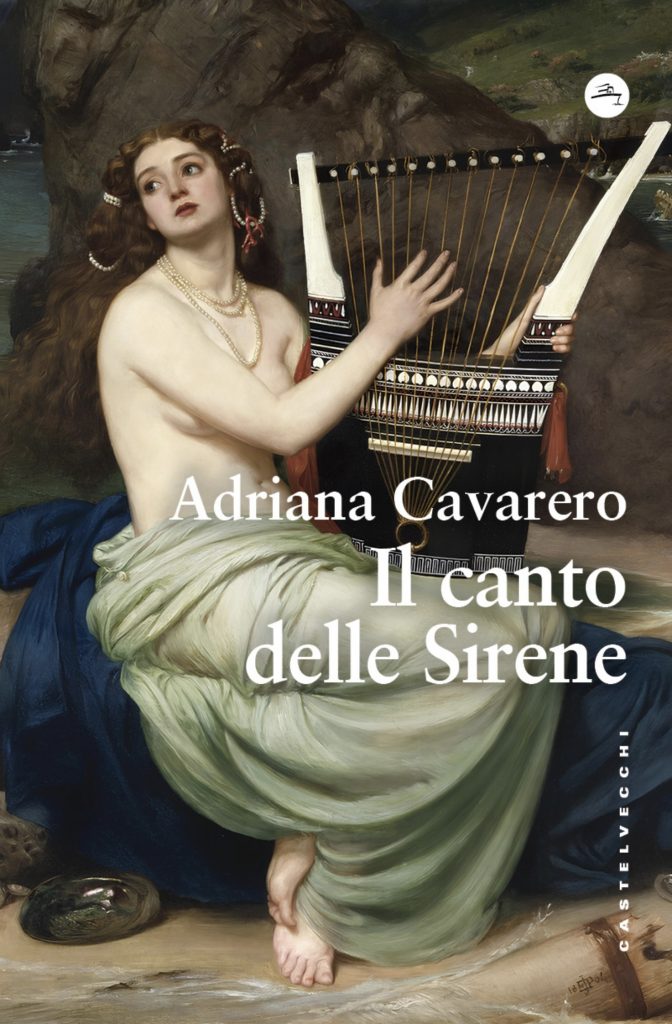
Adriana Cavarero – Il canto delle sirene (2025) – Castelvecchi Editore
Ulysses plugs his companions’ ears with soft wax and has himself tied to the ship’s mast so that he can enjoy the Sirens’ song without dying. However, the Sirens do not sing for him, nor do they want to seduce him: they sing for their own pleasure, “one to the other”. In a compelling comparison with Plato, Kafka, Brecht, Blanchot, Adorno and Eliot, Adriana Cavarero questions the traditional representation of the Sirens as primordial, bewitching and dangerous beings, rethinking these mythical figures as free subjects, women who sing for themselves, enjoying their own voices and music as a shared experience that escapes the rigidity of logos. Opposing the Homeric paradigm of the cunning and victorious hero – who, according to some 20th-century interpretations, has become a ridiculous little man – with a vision in which the female voice is harmonious and plural, Cavarero offers a novel and subversive interpretation of a millennial myth, capable of restoring to the Sirens the still unsolved mystery of their singing power.
Adriana Cavarero
She is one of the most influential contemporary Italian philosophers. Professor Emeritus of Political Philosophy at the University of Verona, she has made a decisive contribution to the development of Italian and international feminist thought, bringing issues such as vocality, narration, vulnerability and the embodied relationship between subjects to the forefront of philosophical reflection.
Press review
- Il canto delle Sirene – Castelvecchi Editore
- Odiseo ha mentito. Le sirene cantano per la gioia di cantare | La lettura, Corriere della Sera
- Il canto irresistibile delle Sirene rivolto a soddisfare loro | La Stampa
- La dignità dei diritti e dei corpi | Gazzetta del Mezzogiorno